How much sleep do you need to lose weight?
Seven to eight hours is the clinical baseline for metabolic health. Drop below six hours and the risk of central (visceral) obesity rises by 13% — and the effect compounds: each hour of lost sleep adds roughly 0.35 kg/m² to BMI. Weekend catch-up sleep does not reverse the damage; the metabolic debt is accumulated during the week, not repaid on Saturday.
What happens to your hormones when you're sleep-deprived?
Sleep is the master regulator of the weight-loss hormone cascade. The overnight growth-hormone (GH) peak — the single largest anabolic pulse of the day — collapses with short sleep, while cortisol climbs and ghrelin (the hunger hormone) spikes while leptin (the satiety signal) falls. The result is a double-hit: your body burns less, and you're hungrier while doing it.
Why does this matter for GLP-1 treatment?
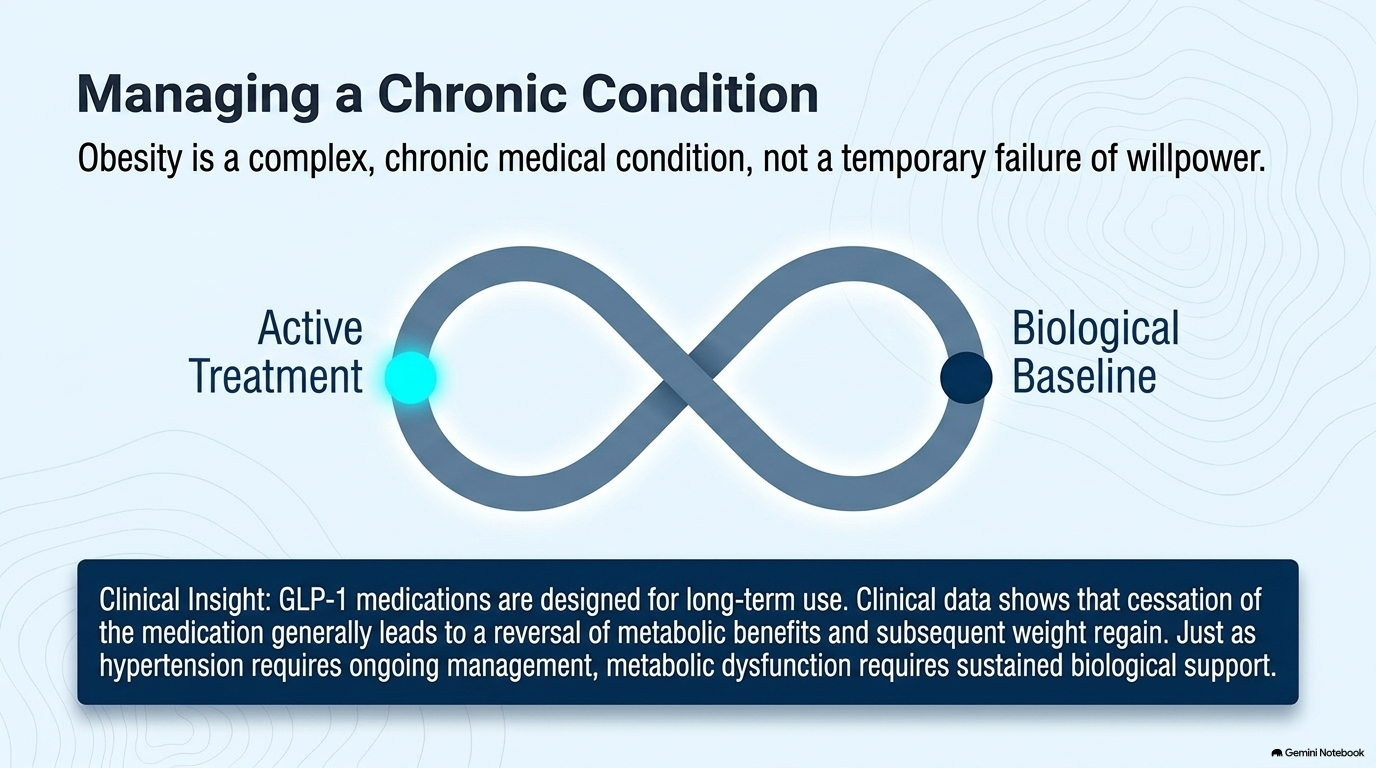
GLP-1 medications blunt appetite at the receptor level, but they cannot repair a broken sleep architecture. Programs in Ocala treat sleep as a first-line intervention: patients who fix their sleep alongside medication respond faster in the first 12 weeks than those who don't — and the 3-4 month evaluation is where the difference shows up.
What's the practical sleep protocol?
Consistent bedtime and wake time (even weekends), no caffeine after 2pm, and a cool dark room. If you're on a GLP-1 and the weight loss stalls, check sleep before changing the dose — it's the cheapest variable to fix and the most commonly ignored.
The Data Table
| Sleep Duration Target | Calculated Risk of Obesity (HR/OR) | Impact on Anabolic Hormone Peaks | Impact on Catabolic & Appetite Hormones | Insulin Sensitivity Impact | Satiety Balance (Leptin/Ghrelin Ratio) | Source |
|---|---|---|---|---|---|---|
| Sufficient Sleep (7–8 hours) | Reference baseline | Triggers peak overnight pulses of Growth Hormone (GH) during slow-wave sleep; stimulates IGF-1 and repair of muscle tissue | Maintains suppressed cortisol; stable appetite regulation | Maintains stable insulin sensitivity and optimal metabolic regulation | Maintains stable leptin levels; suppresses ghrelin | 1, 2, 3, 4, Non-Communicable Diseases Watch guidelines, User Description |
| Short Sleep (≤ 6 hours) | 13% higher risk of central obesity in adults | Reduces GH pulses; blunts muscle protein synthesis | Elevates catabolic cortisol (promoting abdominal fat); increases appetite-stimulating ghrelin | Impaired insulin sensitivity; linked to insulin resistance and metabolic dysfunction | Decreased leptin and increased ghrelin; negative satiety balance | 1, 2, 3, 4, Non-Communicable Diseases Watch guidelines, User Description |
| Loss of Sleep (Incremental) | 0.35kg/m² increase in BMI per 1-hour reduction in sleep | Progressive decline in anabolic peaks and GH secretion | Incremental rise in catabolic cortisol and hunger-stimulating ghrelin | Progressive decline in cellular glucose uptake efficiency; causally linked to weight-related metabolic decline | Shift toward hunger (ghrelin dominance) | 1, 2, 3, Non-Communicable Diseases Watch guidelines, User Description |
| Weekend Catch-Up Sleep | Fails to reduce childhood obesity risks; may help reduce risk in working adults | Disrupts overnight GH pulses due to circadian misalignment | Disrupts metabolic regulation; fails to pay off sleep debt; unstable cortisol levels | Impairs metabolic regulation due to circadian misalignment and failure to repair metabolic debt | Fails to restore hormonal balance; causes circadian misalignment | 1, 2, 3, 4, Non-Communicable Diseases Watch guidelines, User Description |